


Buying a plant: how hard can it be? You head off to the garden centre, pick something pretty & bang it in the garden, job done! But how does a professional gardener choose plants for your garden?
There are a few things to consider that will bring you a lot more success & will lead directly to increased joy levels.
Asses Your Garden
Step one is to go & have a look at the gap in your garden that you’re trying to fill, ask yourself a few questions about this spot
- How much sun hits it during the day? You’re looking for a general answer – is it more or less than six hours a day? If it’s less than six hours you’re looking for something labelled ‘partial shade’, more than that is considered ‘full sun’. It might be in dappled shade from a tree, or perhaps the sun is blocked by a wall for certain hours of the day – all of this counts as partial shade.
- How big a space do you have? There’s no point in buying a plant which will get so large that you have to constantly prune it to stop it squashing the guy next door, similarly you don’t want large gaps of empty soil between your plants, as bare soil is not healthy (you can always mulch it if you like the look of widely spaced plants).
- How long do you want this space filled for? Perhaps you just want something to fill a gap while a larger shrub grows to fill the space, or maybe you want to mix it up & have something fun & different there every year. In which case it makes sense to get an annual – a plant that grows, flowers & dies off within a year. If you want something more long term then go for a perennial – a plant whose lifecycle lasts for many years, often dying back in winter & then growing new leaves & flowers the next year.
With these questions answered you can head of to the garden centre with confidence – if you check the labels all of this information should be easy to find.
How to research what your plant needs
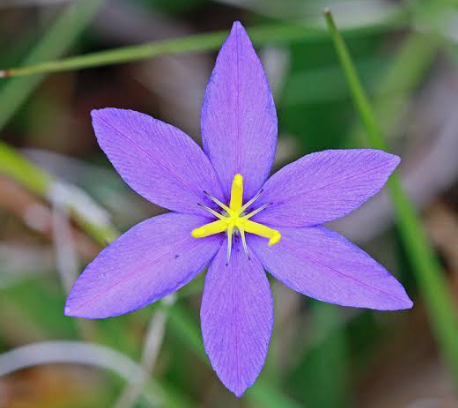
All plants have specific requirements based on the climate & conditions they evolved in. If you know a little Latin you might be able to guess some of them, for example this cute little guy is Nemastylis floridana, it’s from Florida as you can see from the name, so if you know anything about Florida climate you’ can tell it’ll know needs plenty of warmth to thrive.
There are more sure fire ways of finding out exactly what a plant needs, I cannot recommend highly enough the RHS website for this. They have a page for nearly every plant you can imagine, all clearly set out with some very valuable information. Have a look at this page for Antirrhinum (Snapdragon)
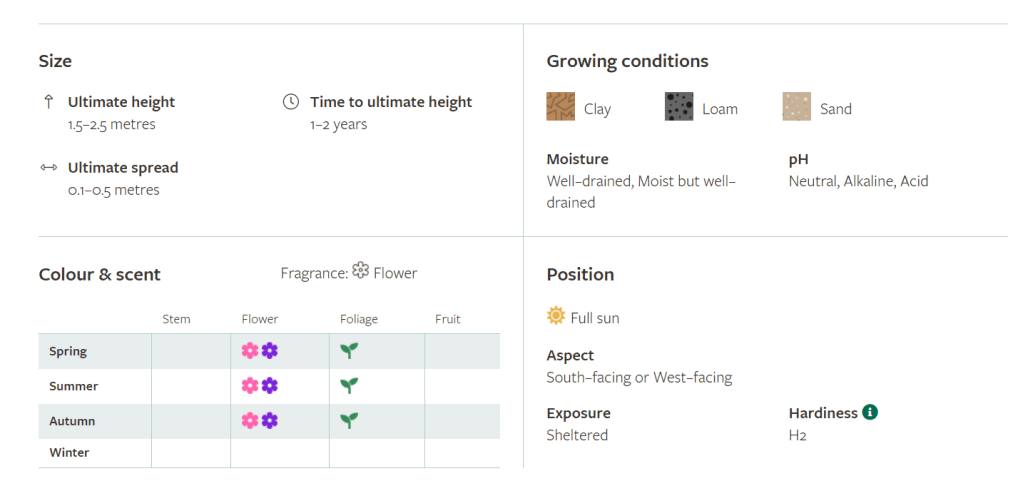
All the information you need is here! You can also work backwards with their Plant Finder tool. You can filter by all the conditions in your garden to find something that will work well.
Will my plant survive winter?
It’s worth mentioning hardiness, especially if you’re buying your plants online. The RHS has a numbered system depending on where in the country you live. If tells you whether the plant is hardy in your local conditions i.e. will it still be alive after being left outside for winter.
If you’re buying online you might be ordering from any part of the country so you need to know if it’ll live. Something hardy in Somerset might need to be put in a greenhouse in Derbyshire, or even brought in to the house.
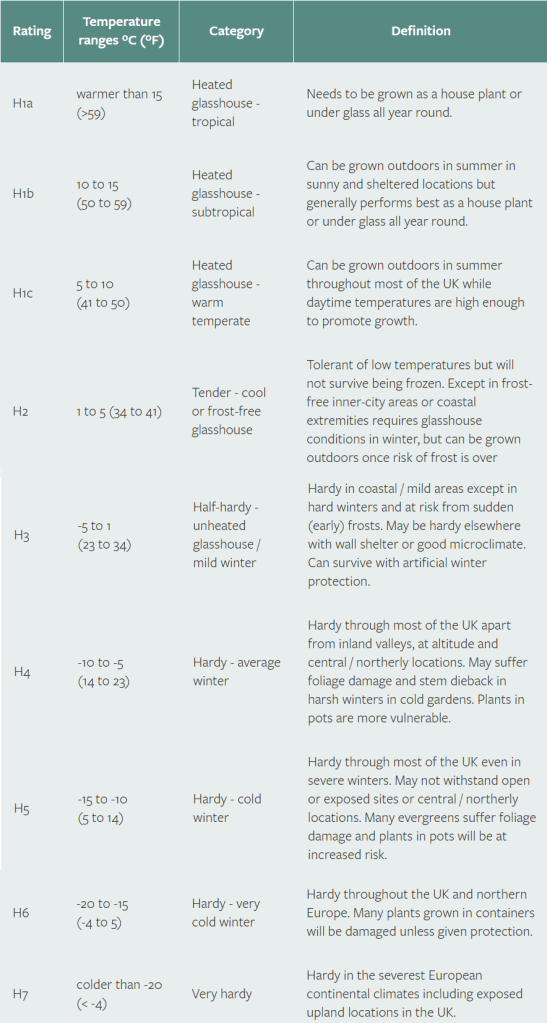
North America has it’s own system of hardiness which is widely used but is much less descriptive than the RHS one. It’s a system of zones, & you can find which zone you live in by clicking here.
Although the RHS system is more detailed, the USDA system is very widely used as well so it’s worth knowing what zone you live in.
Think about pairing plants
Once you’ve taken all that in to consideration you can think about what will look nice! A basic rule of thumb is to pair up plants that look really different – for example one with floaty red flowers next to something architectural & dark green. That helps you to really see what you’ve got rather than ending up with a vague green mush.
Design is a whole other subject though, which will take many blog posts to do justice, but I’m working on exactly that! Check back soon for my intro to border design.
What have you bought for your garden recently? Do you have a fun shady microclimate or a clay filled north facing slope to contend with? Let me know in the comments.
Subscribe for more professional secrets




 Buxton Gardens
Leave a comment