


Slugs! Aaaarrrrgggghhh! I think you all know what I mean, especially if you start plants off from seed – those fresh new shoots are just what a baby slug needs to grow big & strong.
Slug pellets may seem like a great answer, but the problem with poisons is that they travel up the food chain, so all the birds that are doing you a favour by eating slugs from your garden are ingesting that poison, & it can kill them. That’s why I steer clear of pesticides, even if they’re organic.
Instead, at the Buxton Gardens nursery, we use manual, cultural and biological methods to control pests. Let’s take a look at how they apply to slugs.
Remove All The Hidey Holes
In our polytunnels, we like to keep things tidy. During the daytime, slugs like to hide under bits of wood, in old plant pots, & anywhere else that’s cosy & damp. If you remove all of those hiding spots you can really reduce numbers, so nothing is allowed to be stored inside. We keep the shed for storage & the growing area for growing.
Create Physical Barriers
I wrap the legs of the shelving with copper mesh. Copper causes an electric current to go through the slug which thickens its mucus & deters it from crossing the barrier. They also don’t like crawling over spiky surfaces, so the mesh serves a dual purpose. I also put gravel or sand on the floor, which does the same thing.
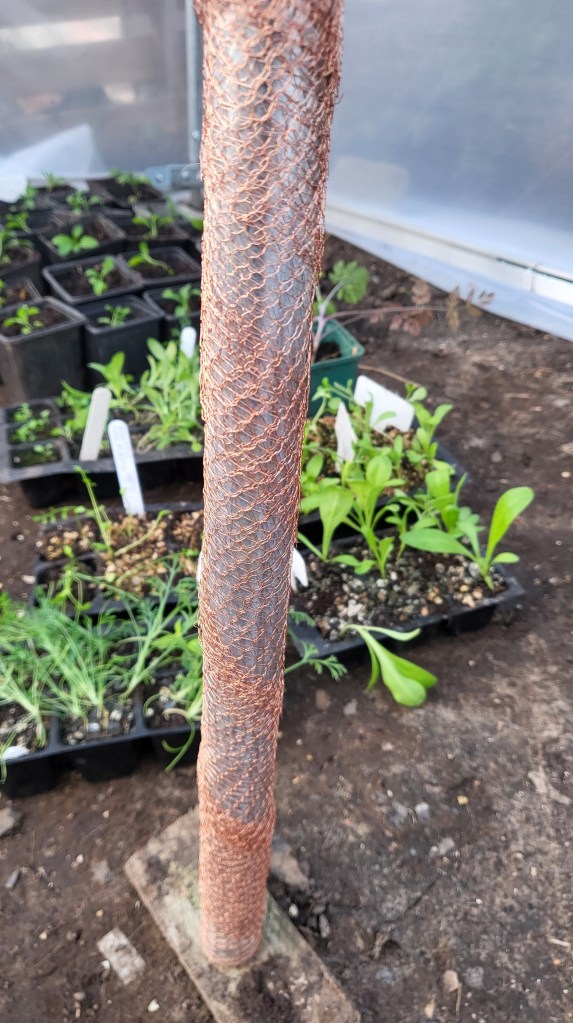
You need to make sure every leg has a good, wide band of mesh on it to prevent them having any way up, and also make sure the shelves of the greenhouse aren’t touching the walls, or they’ll just crawl up that way instead. We’re trying to create a complete island here that slugs can’t get on to.
Identify Who’s Most At Risk
It’s really worth knowing which plants are slug favourites so you can focus your efforts. Plants like Dahlias, Gladioli, Delphiniums & Sunflowers can disappear overnight! To find out which plants are at risk, you can look up individual species on the RHS website. If you scroll all the way to the bottom there’s a section called ‘Pests’ which lays out the most common culprits – see here the entry for Sunflowers.
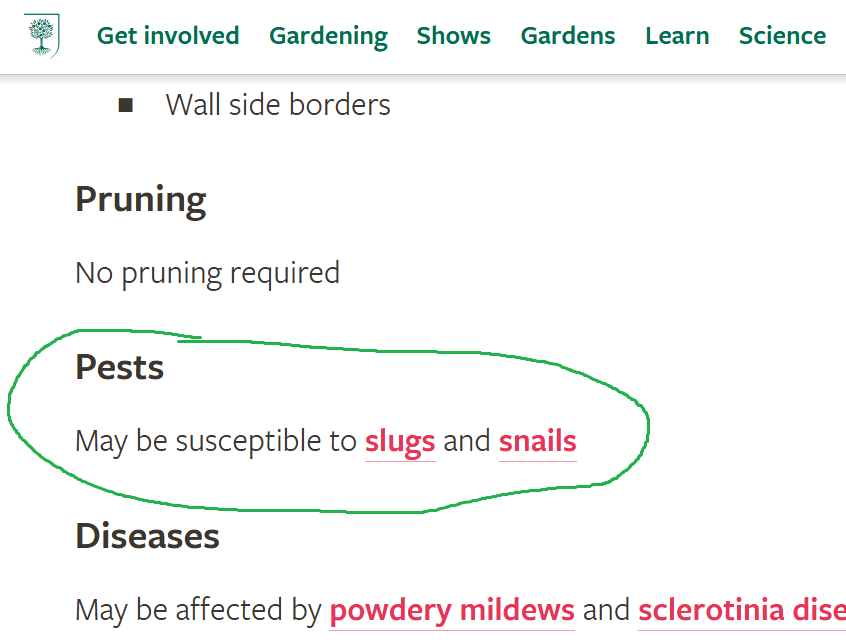
Any page which lists slugs & snails means those plants need special protection. Anything that’s slug proof should be ok – definitely worth knowing if you’ve got limited space & you need to put some plants on the floor.
Many people will tell you to check under pots and trays for hiding slugs, or to go out at night with a torch & try to catch them in the act. I have never gone in for this, although I suppose it couldn’t hurt. I would definitely steer well clear of beer traps. or anything that attracts slugs. You might find plenty of them in there, but the likelihood is you’ve just attracted more of them, plus beer traps take emptying & refilling which just adds more jobs to your list.
Plants In The Ground
What about plants that aren’t in controlled environment like a greenhouse? All pest management starts with cultural control. This means, what can you do in the growing of your plant to deter pests, without taking any direct action against them? In the case of slugs & snails this might involve growing the healthiest plant you can, as they tend to want to eat the weakest, easiest to eat plants first.
For example, don’t try to grow a plant that needs more sun than your garden gets each day. This can lead to leggy, weak growth which is likely to be targeted by molluscs that like something soft to much on. You should also avoid fertilising with nitrogen, which gives lush soft leafy growth that is a prime target for breakfast.
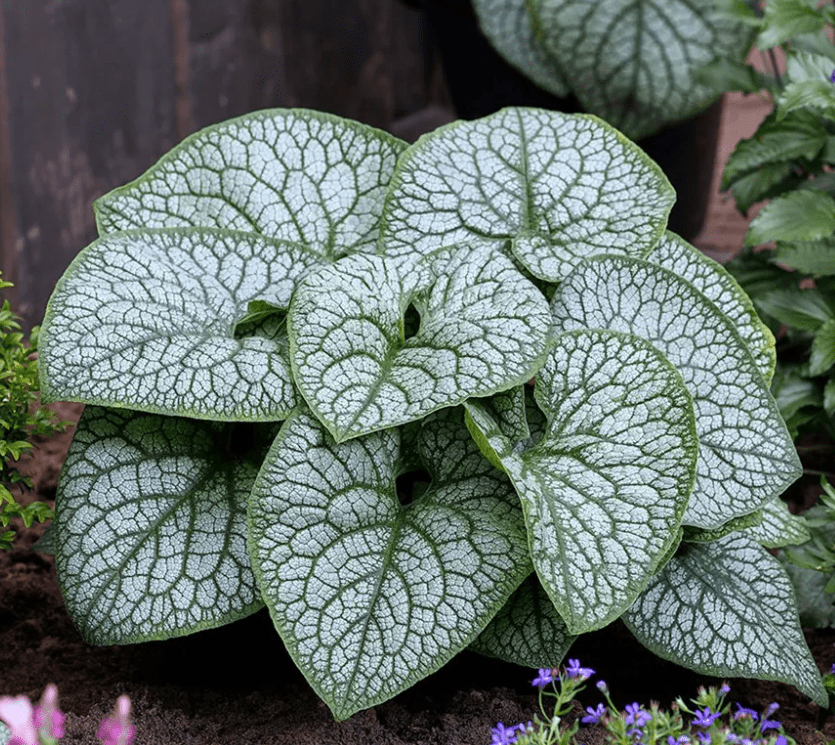
Sometimes it’s worth thinking about what you’re planting. I’ve found Hostas get decimated in my customers’ gardens, so I’ve started planting Brunnera instead. It ticks all the Hosta boxes – attratcive foliage, low growing clumps, grows happily in the shade, but it just doesn’t seem as tasty so it gets left alone.
Bring In The Troops
If all else fails, I look at using biological controls. In the case of slugs you’re going to be looking at Nematodes. Nematodes are microscopic, soil dwelling organisms that eat slugs for breakfast. You can buy these in a packet online, then you add them to water & drench the soil.
They work better in a controlled area like a greenhouse, but you can use them outside. You need to make sure you follow the packet instructions exactly, as they have a certain temperature range they won’t work outside of. That also means they can only be used at certain times of year, so they’re not a golden bullet, but they can definitely be helpful.
One of the best ways I’ve found of reducing slugs in my garden is simply to regularly feed the birds. Since I started attracting more birds to my garden I’ve seen a dramatic drop in the amount of slug damage. As always, working with nature can make your job so much easier!
Good Luck!
I hope that gives you some good ideas to protect your precious plant babies. Let me know in the comments if you’ve found something that works for you!
 Buxton Gardens
Leave a comment