


It might be surprising to learn that gardening comes with a carbon footprint. Of course lots of gardeners use petrol powered tools, cover their space with plastic grass & spray chemical fertiliser everywhere, but even the simple act of digging can release carbon in the the atmosphere. So if you’re interested in the nitty-gritty, here’s the slightly obsessed person’s guide to low-carbon gardening.
Water Management
Processing mains water to make it clean & safe releases carbon. The lowest impact way to water your garden is by harvesting rain water in a container to save for times of drought. This also helps to reduce the flood risk for everyone, since water is diverted away from storm drains during times of heavy rain, and instead added to the soil when it’s dry & plants can use it.
There are so many other ways to save water in your garden as well. You could consider these ideas:
- Do away with sprinklers. With sprinklers, a lot of the water is sprayed in to the air and evaporates. Instead choose a targeted irrigation system like drip irrigation which waters right at the roots of the plant where it’s needed. Plants don’t need their leaves watering! And when you water at the base, the leaves shade the damp soil, preventing that water from being evaporated.
- Water in the morning or evening. It’s the same principle – the water is more likely to reach the roots of the plant, and less likely to evaporate away.
- Let your lawn go brown. Yes, it sounds a bit scary! But unless you’re in charge of a golf course, you can still enjoy a browning lawn, the kids can still play football on it, and I promise you, it will recover when it rains again. Lawns are surprisingly tough! If you have bare patches that need re-seeding, try to go for native Bent and Fescue grasses – they’re deep rooted and will survive drought better.
- Choose your plants wisely. If you’ve got an area that’s prone to drying out, perhaps at the top of a slope, or somewhere that’s very exposed, think about drought tolerant plants like Lavender or Rosemary that have evolved to live in hot, dry places. Your plants will need less attention, & they’re less likely to die, meaning you don’t have to replace them. Replacing plants costs carbon too!
- Cover the soil. Bare soil loses water through evaporation, so you really want to avoid any bare soil if you can. Either plant ground cover plants, or mulch with bark chip, anything that keeps the water underground.
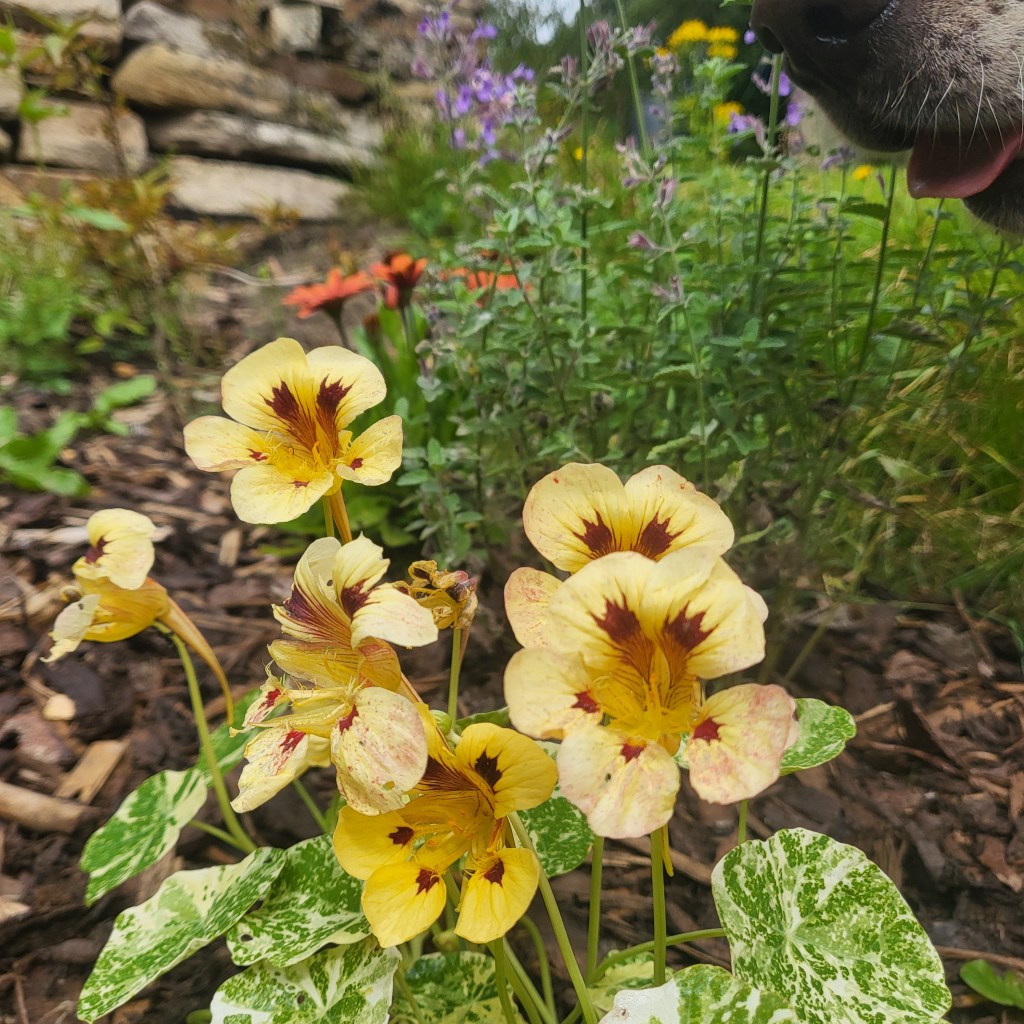
Mulching with bark chip 5-7cm deep helps keeps water in the soil & stops you having to water so often.
No Dig
As I mentioned in the intro to this post, when you dig you actually release carbon in to the atmosphere. If you dig your allotment over once a year, not only are you releasing carbon stored in the soil, you’re also introducing air in to the soil which feeds all the microorganisms that decompose dead leaves and bits of plant matter down there. This boost of oxygen makes them work even faster, so they respire carbon dioxide at an even faster rate!
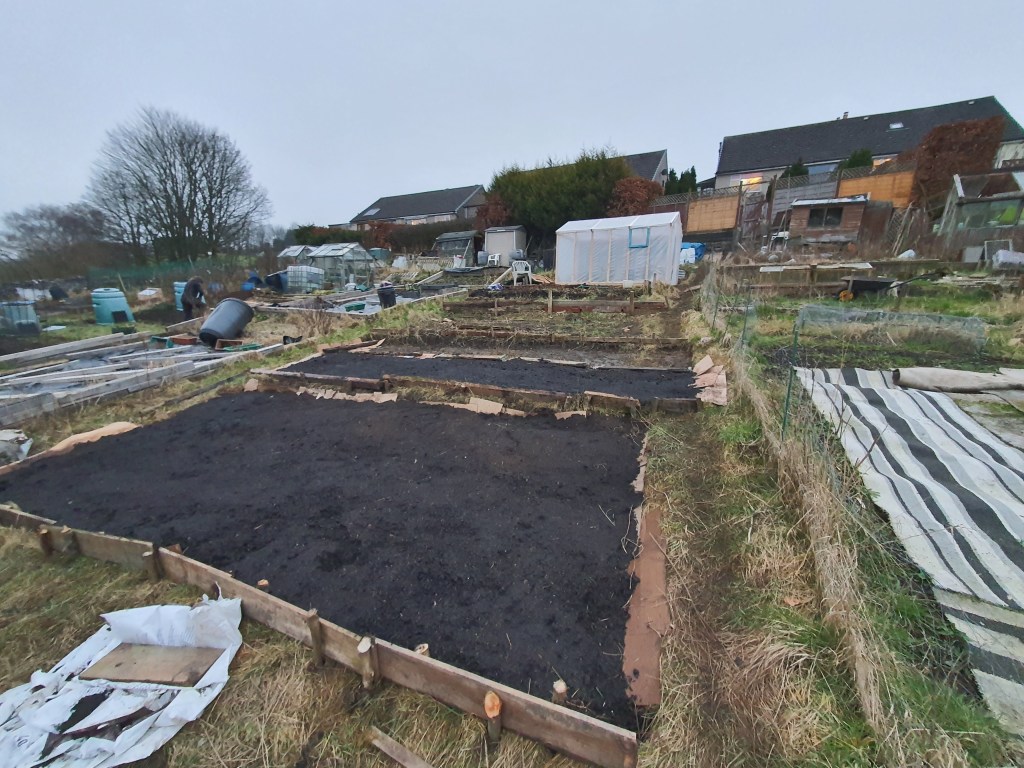
No dig beds being prepared – cardboard to stop the weeds, topped with compost to grow the plants in.
So how can we reduce the amount of digging we’re doing in the garden? Well, one thing you can do is choose more perennial plants and less summer bedding. Summer bedding plants are things like French Marigolds and Busy Lizzies. They flower their socks off for one summer before dying, so they need replacing every year, which involves, you guessed it, digging! Not only that, but summer bedding plants can’t survive frosts, so they have to be grown in huge heated greenhouses early in the year, all of which is really carbon intensive.
Most of us aren’t making ‘Welcome to Buxton’ flower displays in our gardens, but you might have some hanging baskets or a slightly more formal display in your front garden, both of which traditionally make use of half-hardy annual flowers. These are great spots to go for something more long lasting like the little purple Campanula poscharskyana ‘Stella’ for your hanging baskets, or rows of low-growing Aubretia or silvery Cerastium for a bedding scheme.
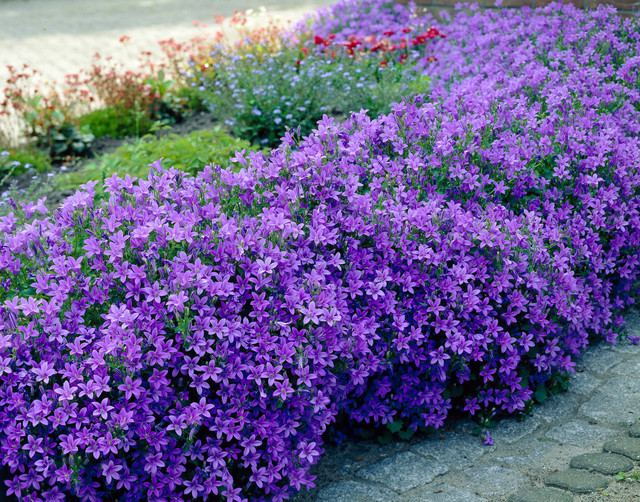
Campanula ‘Stella’. Courtesy of http://www.jparkers.co.uk
If you really want to mix it up each year, look for hardy annuals like cheerful Pot Marigolds or Sweet Peas. They don’t need any heat to grow, so they’re a more sustainable option.
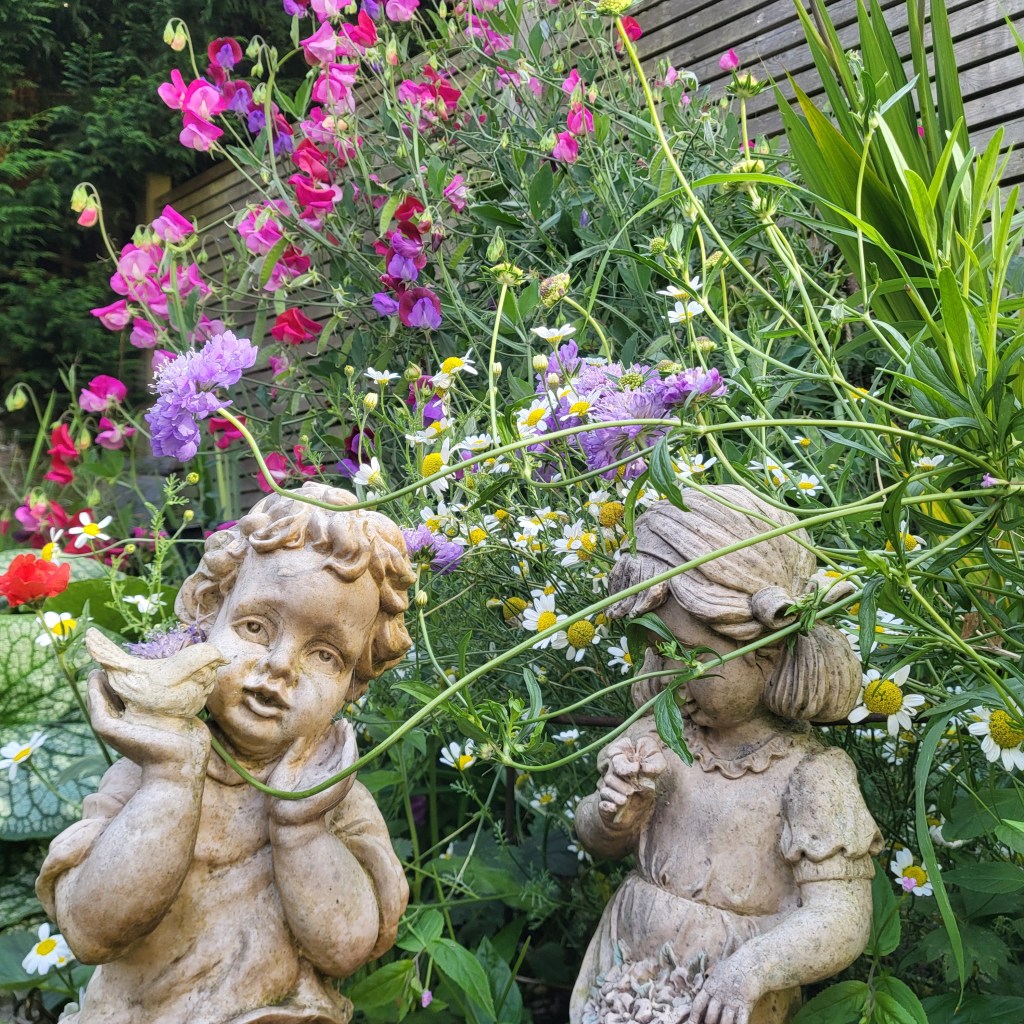
I love Sweet Peas so much – I plant them for my gardening customers every year. (They’re the pink & purple ones at the back)
For the most no-dig bang for your buck, always plant a tree. Once they’re established, trees take so little looking after – no digging, no fertilising, very little watering, they’re about the lowest carbon thing you can plant, & that’s before we even get on to how they store carbon in their tissues.
You might have heard about the No Dig method of vegetable growing, made popular by Charles Dowding, and that’s great stuff! It dosn’t particularly apply to ornamental flower gardens, where we’re not constantly removing plants like you would in a veg patch. In a vegetable patch you need to do something to add nutrients back in to the soil, where as in an ornamental garden you can allow things to die and return to the earth. If you are thinking of adding some nutrients to give the garden a boost, consider mulching with compost instead of digging it in, and keep all that carbon underground where it belongs!
Fertiliser
You still might want to fertilise your flower garden, for example if you’re growing a cutting garden where you’ll be removing a lot of biomass, and you also want to keep those blooms coming strong all year. In that case, the lowest carbon option is to make your own.
Chemical fertilisers that you get in a bottle from the garden centre are created using a chemical reaction call the Haber-Bosch process. This is an incredibly energy intensive way of creating plant-available nitrogen, and accounts for 3% of all global carbon emissions. Then you’ve got the packaging, the shipping etc etc, all of which takes carbon. So how do we avoid it?
If you want to keep those blooms coming, your hands down best option is to grow some Comfrey in a pot and use it to make comfrey tea. There are a few methods of doing this, they’re not hard, although you will need to plan ahead as it takes a few weeks to brew. Comfrey is high in potassium which is exactly what plants need to make flowers & fruits, so you can use it on your tomatoes too. This is the Garden Organic method, which is what’s worked well for me in the past.
If you don’t fancy making your own, go for an organic waste product such as chicken manure pellets. These haven’t been manufactured, so the carbon footprint is much lower, & you’re also making good use of a waste product that could otherwise become a pollutant.
Liquid seaweed is a good option, that’s more for green leafy growth than flowering, as is nettle tea, which you can make at home in a similar way to the comfrey tea. Not to mention of course, that nettles are a crucial food for the larvae of the Red Admiral Butterfly among others, so it’s great to cultivate a nettle patch somewhere in your garden if you have the space.
What To Do With ‘Stuff’
The last place I’d focus my energy on to cut carbon use in the garden is in all the stuff. The single use plastic plant pots, the compost bags, old tools, anything you’re going to use that’s eventually going to wear out or outlive its usefulness.
According to the book ‘How Bad Are Bananas’ by Mike Berners-Lee, it’s nearly always a lower carbon option to use the thing you have until it falls apart, rather than buy a new thing, even if the new thing is more environmentally friendly. So for example, last year my petrol lawn mower died & I replaced with a battery one, but I waited until it was really, genuinely falling apart (it had patches welded on to it a few times!). The emissions from making the new mower & shipping it, along with the carbon associated with disposing of the old mower or recycling it, outweighed the emissions from running it for an extra year or two. It seems counterintuitive, but it’s actually true.
So buy the best quality thing you can buy, maintain it, mend it, do whatever you have to do to avoid buying new things. When you buy something, think about what will happen to it when it’s no longer useful – so for example, taupe coloured plant pots can be recycled by the council, whereas black ones often can’t, plant supports can be made from twine which will break down, rather than plastic coated wire which can end up all over the garden for years.
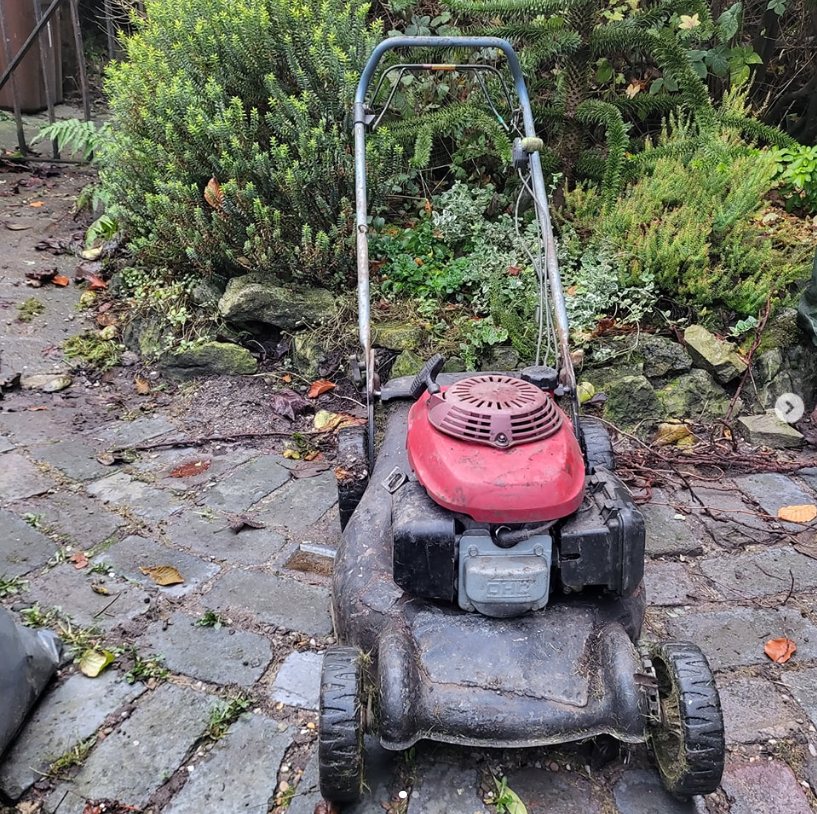
My ancient, patched up petrol mower. Gone but not forgotten.
In Conclusion
Low carbon gardening is achievable, & you can still have a flourishing veg or flower bed without all the extra ‘stuff’ that sometimes seems to come along with it. With a little thought & creativity your garden can be beautiful as well as climate positive. So get out there & get recycling!
Do you have any tips to reduce carbon emissions in the garden? Share them below!


Leave a Reply